I live in Bristol. Can I check whether sitagliptin can be delivered to my postcode before I place an order?
Yes. Enter your Bristol address at checkout to see the destinations currently available for this product before payment.


| Quantity | Price per tablet | You save | Total price | |
|---|---|---|---|---|
| 30 | £4.02 | - | £120.59 | |
| 40 | £3.79 | £9.29 | £151.49 | |
| 60 | £3.53 | £29.24 | £211.94 | |
| 90 | £3.35 | £60.14 | £301.63 |
Your order is securely packed and usually dispatched within 24 hours. Here is what a typical parcel looks like.
It is about the size of a regular letter (24x11x0.7 cm) and does not show any details of what is inside.



| Delivery Method | Estimated delivery |
|---|---|
| Express Free for orders over £226.68 | Estimated delivery to the UK: 4-7 days |
| Standard Free for orders over £151.12 | Estimated delivery to the UK: 14-21 days |












Diabetes occupies a leading position among diseases that cause severe complications. First of all, it is associated with a high cardiovascular risk. Thus, in patients with diabetes, the likelihood of developing a stroke increases threefold, and myocardial infarction - fivefold. Diabetes worsens the course of diseases of the kidneys, peripheral vessels, and joints. Besides, against its background, the risk of purulent complications increases. Type 2 diabetes mellitus is a heterogeneous disease with multiple pathogenetic mechanisms. Its development can be determined both genetically and by lifestyle, environmental factors, and stress.
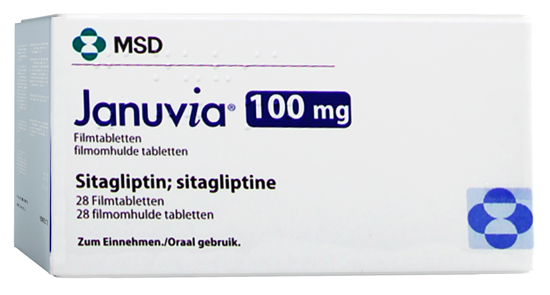
Januvia (Sitagliptin) is the first drug from the group of DPP-4 inhibitors (gliptins). Sitagliptin phosphate inhibits DPP-4 by 91.7%. Nowadays, it is the most studied drug of the gliptin group. It has been used in clinical practice for over 10 years. Find out how the medication works and how to take it the right way so that you can enjoy its benefits and avoid unwanted adverse reactions.
Have you heard much about Januvia, but you have no idea what it is? So, let's answer, "What is the medication Januvia?" It is the drug that is taken orally by patients diagnosed with type 2 diabetes. The main active substance of Januvia is Sitagliptin that is insoluble in isopropanol. The drug refers to antidiabetics (IV inhibitors). Sitagliptin tablets can be used either for monotherapy or as a part of combination therapy.
Healthcare specialists prescribe Januvia to patients who experience the need to control high blood sugar. In most cases, the medicine is used as a part of the treatment course that includes physical exercises and a healthy diet. The main principle of action of the medication is the adjustment of glucose and insulin levels. Take into account that Januvia is the drug that is used for the treatment of type 2 diabetes. It shouldn't be used by patients who have been diagnosed with type 1 diabetes mellitus.
Table 1: Data for available formulations.
| Drug name | Brand name | Company | Available strength |
| Sitagliptin phosphate | Januvia | Merck Sharp & Dohme Co. | Tablet: 25 mg, 50 mg, 100 mg. |
| Combination: | |||
| Sitagliptin phosphate + Metformin hydrochloride | Janumet | Merck Sharp & Dohme Co. | Tablet: 50 mg + 500 mg, 50 mg + 1000 mg. |
| Sitagliptin phosphate + Simvastatin | Juvisync | Merck Sharp & Dohme Co. | Tablet: 100 mg + 20 mg. |
You need to follow the dosage recommendations not to harm yourself. The standard dosage is 100 mg per day. But take into account that you may need the adjustment of the dosage due to your health condition. Follow Januvia administration instructions below:
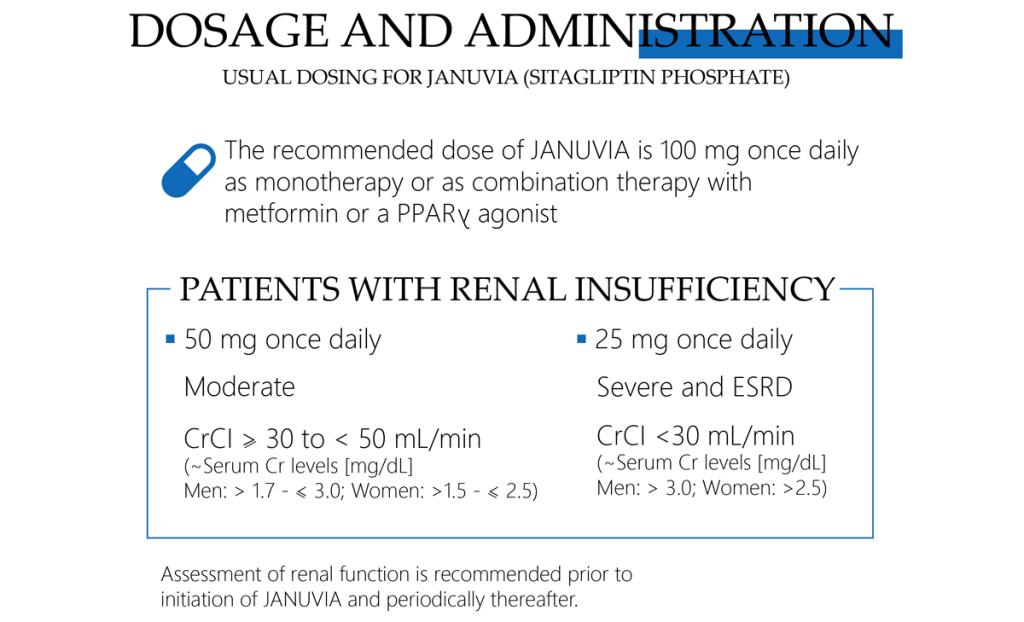
Most patients with type 2 diabetes are recommended to take 100 mg of the drug per day. However, there may be exceptions. Those patients who suffer from renal impairment may need a lower dosage. Your doctor may prescribe you to take 25 mg once a day, depending on the severity of your condition. Patients with hepatic impairment don't need the dosage adjustment.
There is no information about the use of the drug for kids under 18 years old. That's why it is prohibited to prescribe Januvia to patients who are under 18.
Januvia shouldn't be taken during pregnancy and breastfeeding period. There is no reliable data about the complete safety of the drug's effect on the fetus. That's why you should avoid taking the medicine during pregnancy. Breastfeeding mothers shouldn't start the treatment course using this medicine as there is no data that the drug doesn't enter the mother's milk.
There is no best time for taking Januvia as you can take it either in the morning or in the evening. The main thing to bear in mind is that it is better to follow the same intake routine and have it at the same time regularly. Januvia's mechanism of action makes it possible to take the drug before meals, during meals, or after meals. Your meal plan doesn't influence the therapy with Januvia. The consumption of food doesn't have a negative impact on the drug's efficiency.
Check what dosage forms of Januvia are available in the market. Pills are supplied either in bottles or in blister packages. Check what dosage forms the drug has to choose the right one according to your treatment course.
There are three dosage forms of Januvia (Sitagliptin) that are produced as round beige tablets.
It is important to follow storage recommendations if you want the drug to work effectively. Keep Januvia tablets at a dry place where the temperature doesn't exceed 30°C. Remember that you should protect the medication from sunlight exposure.
Studies in which Sitagliptin pills were compared with placebo show that it provided a decrease in the level of glycosylated hemoglobin (HbA1c) by an average of 0.6-0.8%, but it did not contribute to an increase in body weight and wasn't associated with a significant increase in the frequency of hypoglycemic episodes such as sulfonylurea preparations.
So, in a double-blind, placebo-controlled, randomized study V. Mohan et al. (2009), involving 530 patients with type 2 diabetes and a baseline HbA1c level of ≥7.5% and ≤11%, in which they studied the efficacy and safety of Sitagliptin as monotherapy, its administration for 18 weeks led to a 1% decrease in HbA1c (p <0.001), fasting glycemia by 1.7 mmol/L and postprandial glycemia by 3.1 mmol/L compared with placebo. By the end of the study, significantly more patients in the Sitagliptin group had reached the target HbA1c level (20.6% in the Sitagliptin group vs. 5.3% in the placebo group, respectively).
BY 2022 the drug shows a better effect if it is combined with a special exercise program and diet. You need to have blood sugar measurements regularly to be aware of your current condition. Medical exams will help develop a treatment program that will be effective for you personally. Take into account that you shouldn't start any workouts or diet without consulting a healthcare specialist.
Placebo controlled clinical studies of Januvia monotherapy* or add-on combination therapy with pioglitazone or glimepiride ± metformin or metformin + sulfonylurea or insulin±metformin: adverse reactions reported in £5% of patients and more commonly than in patients given placebo, regardless of investigator assessment of causality*
Januvia Table 2
| Body system/adverse reactions | Number of patients (%) | |
| Januvia 100 mg | Placebo | |
| N = 443 | N = 363 | |
| Infections and infestations | ||
| Nasopharyngitis | 23 (5.2) | 12 (3.3) |
| Januvia 100 mg | Placebo | |
| + pioglitazone | + pioglitazone | |
| N = 175 | N = 178 | |
| Infections and infestations | ||
| Upper respiratory tract infection | 11 (6.3) | 6 (3.4) |
| Nervous system disorders | ||
| Headache | 9 (5.1) | 7 (3.9) |
| Januvia 100 mg | Placebo | |
| + metformin | + metformin | |
| + sulfonylurea | + sulfonylurea | |
| N = 210 | N = 212 | |
| Metabolism and nutrition | ||
| Hypoglycaemia | 31 (14.8)* | 10 (4.7)* |
| Januvia 100 mg | Placebo | |
| + insulin | + insulin | |
| (± metformin) | (± metformin) | |
| N = 322 | N = 319 | |
| Metabolism and nutrition | ||
| Hypoglycaemia | 50 (15.5) | 25 (7.8) |
* Intent to treat population. * Overall, the safety profile of the 200mg daily dose was similar to that of the 100 mg daily dose. * Weeks 0-24.
Like any other drug, Januvia may cause side effects. But most patients admit that they haven't suffered from serious adverse body reactions when taking the drug. Check what side effects of Januvia you may face during the diabetes treatment course and inform your healthcare specialist in case you notice severe adverse reactions.
According to patients who have already taken Januvia (Sitagliptin), it is relatively safe. However, it can cause some unwanted side effects like a sore throat, running nose, headache, backache, stomachache, and pain in muscles. All the side effects are temporary, but if you have noticed that they interfere with your normal life, call the doctor immediately and get a consultation regarding your health problems.
In rare cases, Januvia may cause nausea and diarrhea, constipation, hypoglycemia (if the drug is taken together with other medications for the type 2 diabetes treatment). Inform the doctor if you have noticed severe side effects like difficulty with breathing, vomiting, blurred vision. Serious side effects may occur in those patients who are sensitive to one of the drug's components or those who don't follow the dosage recommendations.
Sitagliptin has an extensive evidence base, extensive clinical experience of use. Its advantages include a glucose-dependent mechanism of action, high efficiency, and safety, the presence of pleiotropic effects, the possibility of using it both as monotherapy and in combination with other antihyperglycemic drugs. In addition, Sitagliptin has no restrictions on its use in patients with liver and kidney disease. Therefore, it deservedly can take a leading position among the drugs that are used for type 2 diabetes. A very important advantage of this antidiabetic medicine is the possibility of its use in diabetic kidney disease, including in patients on hemodialysis. A decrease in the glomerular filtration rate (GFR) in people with diabetic kidney disease forces doctors to adjust the doses of insulin and a number of other antihyperglycemic drugs because of their cumulation and the risk of hypoglycemia, and also limits the use of some drugs, such as metformin, because of the risk of lactic acidosis.
With mild and moderate renal impairment, dose adjustment of Sitagliptin is not required, and with severe creatinine clearance <30 ml/min, it should be halved - to 25 mg/day. In these patients, this dose provides a hypoglycemic effect comparable to 50 mg in individuals without renal impairment. In addition, Sitagliptin can be used for mild to moderate liver dysfunction. It should also be noted that the drug has no negative effect on bone tissue and doesn't cause the development of osteoporosis.
The possibility of using Sitagliptin in combination with insulin has also been studied. This allows you to significantly reduce the dose of insulin and, therefore, minimize the risk of undesirable effects associated with insulin therapy - hypoglycemia and weight gain.
As for the cons, it is possible to mention its price. Some consider it to be an expensive medication. Another con is that it is a prescription drug only. You need to go to the doctor each time and get a prescription when you want to buy Januvia. As for side effects, in most cases, they aren't severe and can't be considered a disadvantage as they take place rarely.
Januvia medication has certain contraindications. It shouldn't be taken by certain groups of patients. Check warnings for Sitagliptin intake below.
If you have passed all the necessary laboratory tests and your healthcare specialist has prescribed Januvia medication to you, it has more benefits to you than risks. Take into account that most patients taking Januvia Sitagliptin following the doctor's prescription don't report any serious side effects. Devote some time to check the list of Januvia warnings not to do harm to your health.
According to numerous studies of the drug interactions, Generic Sitagliptin Januvia can interact with Digoxin. There is no need to adjust the dosage of the drug, but patients who take Digoxin should inform the doctor about this. One more thing to keep in mind when taking Januvia is its ability to interact with an insulin secretagogue. In this case, your pharmacist may reduce the dosage of insulin to avoid the risk of hypoglycemia.
You are strongly recommended to tell the doctor if you have been taking any antidiabetic drugs recently or are taking them now. Inform your healthcare specialist about the intake of any other drugs to exclude any risks connected with drug interactions.

I live in Bristol. Can I check whether sitagliptin can be delivered to my postcode before I place an order?
Yes. Enter your Bristol address at checkout to see the destinations currently available for this product before payment.
I'm in Belfast. Can I confirm delivery to my address before paying for the sitagliptin tablets?
Yes. Please enter your Belfast address at checkout; the available delivery options for that address will be shown before you pay.
My diabetes has recently been reclassified as type 1. Can I still use sitagliptin 100 mg?
Sitagliptin is intended for type 2 diabetes and is not a treatment for type 1 diabetes or diabetic ketoacidosis. A diabetes specialist should review the diagnosis and treatment plan before this medicine is used or continued.
| Active ingredient | Sitagliptin |
|---|---|
| Drug class | DPP-4 inhibitor |
| Dosage form | Film-coated tablet |
| Available strengths | 100 mg |
| Route | Oral |
| Storage | Store at 20°C to 25°C; excursions permitted to 15°C to 30°C. Keep in the original container, away from moisture and excessive heat. |
| ATC code | A10BH01 |
This product has 28 ratings, but only 6 written reviews so far. Share your experience and help other customers.
The parcel arrived within the delivery period shown when I ordered.
The 100 mg package for the sitagliptin order matched what I ordered.
On opening the parcel, I found secure inner packaging and undamaged Januvia.
Pleased with how the order arrived.
I liked the neutral outer packaging. Nothing advertised the contents.
Very good quality overall.